The Importance of Joy for School Principals
Collaborative planning, delegation, and tricycle races
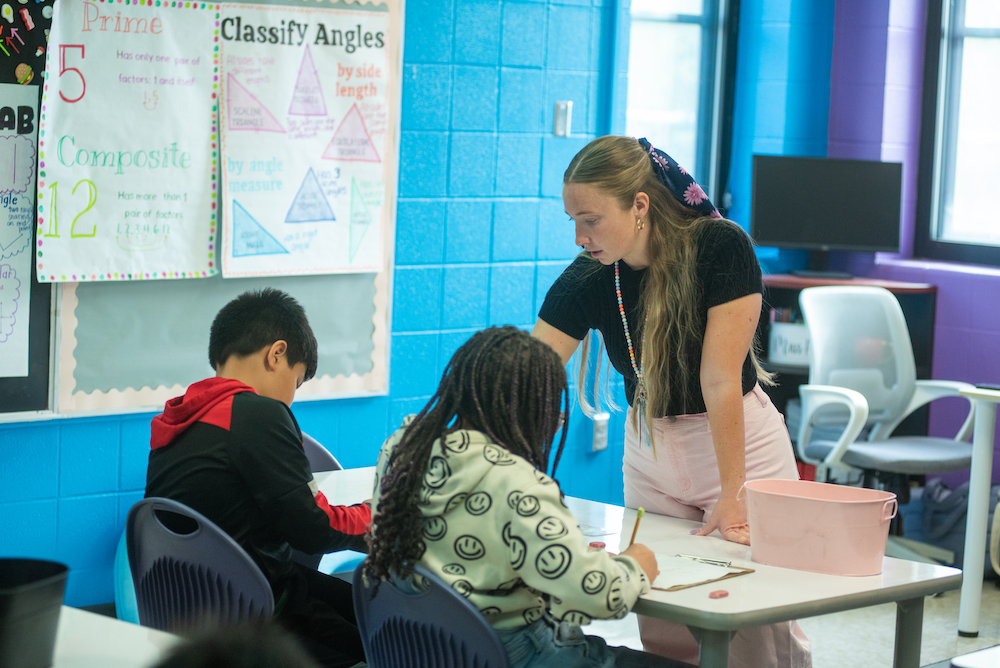
Over the last few months, I’ve been fortunate to spend time in schools with our team and our partners. When I get the chance to be back in classrooms and talk with teachers and school leaders, I often find myself energized by the joy they bring to the work. It reminds me of some of my most joyful moments as a school principal: learning (surprisingly complicated) handshakes from 5th graders, seeing teachers genuinely connect during collaborative planning, and competing in a tricycle race with kindergartners (yes, that really happened; no, I didn’t win). Those moments can seem superficial—more like the gravy than the main course. It can even be tempting to deprioritize them when you’ve got a mountain of “real work” on your plate. But, in my experience, those seemingly small moments fuel our shared drive toward achievement, and they’re why principals stay in the job despite how grueling it can be. Facilitating and participating in those moments are some of the most fundamental roles that principals play in their school communities.
However, it’s challenging for principals to prioritize creating and sustaining joyful communities when they’re responsible for so many things. As my colleagues at Instruction Partners wrote in a paper about principal role clarity last year:
“Being a principal is an exceptionally challenging job with sprawling responsibilities. Staff, students, and families look to principals for answers, and district and state offices often pull them in multiple directions. Among competing operational and administrative priorities, principals also have a mandate to ensure that students are learning every day” (p. 6).
Anyone who has been a school leader for more than a week knows how true that is. With myriad boxes to check, it’s all too easy for principals to let passion for learning and desire to help kids—the parts of the job that really drew them to the work—take a back seat to compliance activities.
That’s a problem—not only for principals, because it can put them on a path to dissatisfaction and burnout, but for teachers and students too. When principals leave their jobs, their “turnover tends to negatively affect not just student achievement but other outcomes, such as teacher retention and school climate” (Grissom, Egalite, & Lindsay, p. xvi). Research has also indicated that “principal leadership has the greatest association with the overall quality of instruction and student achievement through the school learning climate. …this implies that principals need to make school climate the priority in their school improvement efforts” (Sebastian & Allensworth, p. 643, emphasis mine). Joy isn’t just a source of sustenance at the individual level; it’s a core characteristic of a thriving school community.
We all know this—good schools are happy places. There’s nothing more fulfilling than watching students learn and grow, and principals are the lynchpin in cultivating the conditions that make meaningful teaching and learning possible. For principals in particular, joy isn’t extraneous—it’s essential work.
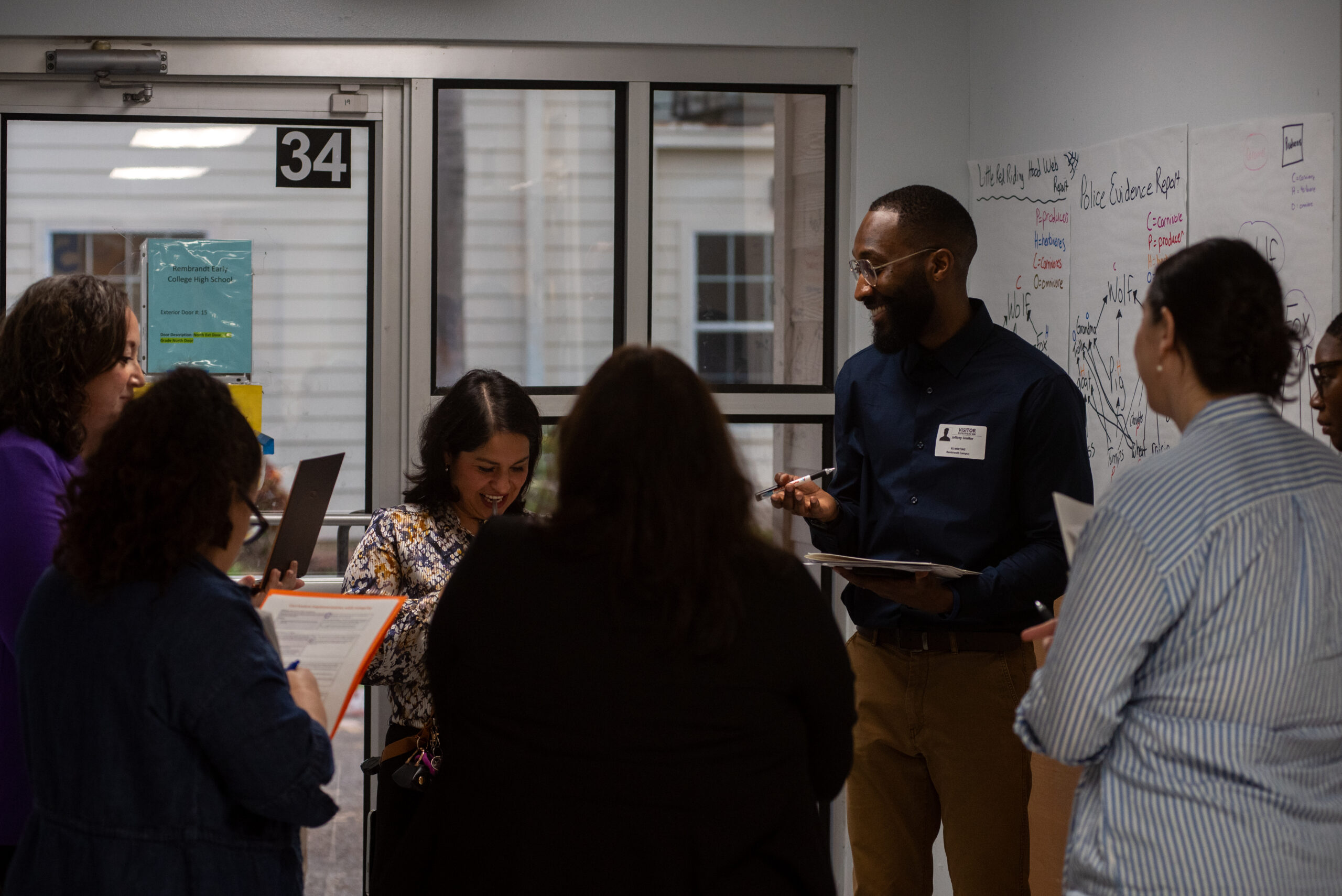
But, it’s not a separate work stream; it’s something that should be embedded in the daily, rigorous work of improving teaching and learning. In my experience, relatively small moves, like being intentional about how we show up for each other, can go a long way. For example, principals should be as present in collaborative planning meetings as they are during classroom evaluations; they should be attentive and responsive to teachers’ needs and communicate excitement and pride when they report wins in their classrooms. Classroom evaluations should be oriented toward positive coaching, helping teachers grow in their craft, not completing a rubric for the sake of compliance.
Finding ways to create focus is also critical. When I was a principal, I was able to clear many tasks off my plate by delegating a greater portion of compliance and reporting work to front office staff. For example, when I arrived as the leader of one school, we had a business manager, who, near as I could tell, essentially spent most of her time ordering and delivering office supplies. She was tremendously underleveraged—both in terms of capacity and talent. In close coordination with her and the central office, I was able to put her in charge of more reporting, custodial staff supervision, and much of facilities management. Not only did this create a lot more time for me to focus on instruction and overall school climate, it transformed her role into an opportunity to grow as a leader in her own right.
I had the benefit of working in districts that enabled and encouraged the kind of adjustments I described above, even when our school had a lighter staffing structure, which was key because principals can’t do that work alone. Central offices have a crucial role in giving principals more room to direct their focus where it’s most valuable.
Recently, Instruction Partners interviewed leaders at districts that have achieved strong student outcomes and clear school leadership roles. We found that, in the systems we examined, central offices had intentionally agreed on a common set of expectations for principals. They worked to ensure that the messages and guidance principals received from different departments didn’t conflict. They took work off principals’ plates by streamlining compliance activities, moving some work (e.g., data pulls) to their own offices, and clarifying the distribution of responsibilities between roles.
You can read case studies for each of those districts, as well as a deep dive into how we partnered with one district to strengthen principal role clarity, in our newly released paper Systemwide Support for Stronger Instruction: The Next Step in Principal Role Clarity. I’m excited for folks to read it because it outlines actionable steps leaders can take to shift work off of principals’ plates and help them reclaim time to focus on the things that matter most. In most cases, that’s probably not going to literally be a tricycle race, but—I’ve got to tell you—if you ever get invited to the starting line, don’t pass it up (but definitely stretch first).
Stay in the know!
Join our mailing list to stay up-to-date on our latest research, resources, and webinars focused on the principal’s role in leading instruction.

Eugene Pinkard, President
Eugene Pinkard began his education career as a teacher—first in rural South Africa, then in Washington, DC. During his time at DC Public Schools, he also served as a principal, principal supervisor, and cabinet member. Most recently, Pinkard has spent five years as director of K–12 leadership at the Aspen Institute Education & Society Program, leading a team that supports education leaders across the nation and develops resources and guidance for the sector. Pinkard manages the internal work of the organization, ensuring partnerships with schools, school systems, and states are strong; research and development goals are met; and staff are supported and empowered.