



Just released:
Systemwide Support for Stronger Instruction: The Next Step in Principal Role Clarity

The Instructional Leadership Framework

Clear direction. Lasting impact.

School leaders want nothing more than to see their teachers and students succeed, but often lack actionable guidance on how to best support strong instruction—especially while balancing many other responsibilities.

We’re here to help instructional leaders guide teams toward their true north:

excellent instruction, every day, for every student.

Over the past decade supporting schools across the country, we’ve seen how a lack of clarity on where to focus teacher support can make the already hard job of leading instruction even harder.

The Instructional Leadership Framework

Grounded in research and informed by our work with thousands of schools, we developed this framework to provide direction and clarity to the complex work of instructional leadership.

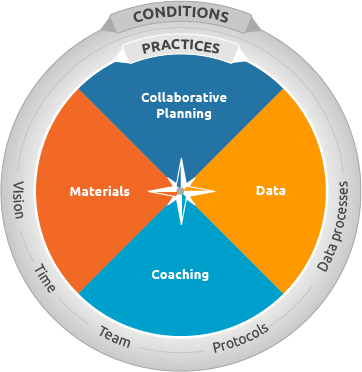
The Instructional Leadership Practices

Effective instructional leadership centers on four research-based practices that are critical to helping teachers plan and deliver meaningful learning experiences for their students.

Adopt and implement high-quality instructional materials

Facilitate collaborative planning​

Coach teachers and leaders​

Understand and act on data​​

The Instructional Leadership Conditions

There are five conditions that are essential to the success of the instructional leadership practices. We’ve found that without these conditions grounding the work, instructional leadership efforts often drift off course.

Vision

Team

Time

Protocols

Data Processes

When implemented together, these practices and conditions create a lasting system for strong instruction—guiding leaders’ decisions to ensure teachers receive sustained, effective support and students experience excellent learning every day.

We’re with you every step of the way.

We know that it takes more than a clear direction to move a team forward.

We partner with school and system leaders to bring the instructional leadership practices and conditions to life in math, ELA, and reading foundational skills—building their capacity to navigate complexity and make confident, strategic decisions about where to focus limited time and resources for impactful teacher support.

Adopt and implement high-quality instructional materials

Select and implement high-quality instructional materials that are aligned to rigorous standards and evidence-based best practices, easy to use, and support every learner.

Facilitate collaborative planning

Lead teachers in learning, sharing, reflecting, and improving their practice by internalizing units, preparing lessons, and analyzing student work.

Coach teachers and leaders

Provide targeted support to teachers and/or leaders that strengthens knowledge, skills, and/or actions to improve their practice.

Reflect and act on data

Utilize data, especially student data, in order to guide instructional choices at the classroom, building, and/or system level (e.g., curriculum selection, teacher supports).

Vision

A clear aspiration and purpose for each practice that aligns to the school’s and system’s overall instructional approach and priorities

Team

An aligned group with clear roles and responsibilities, shared vision, and accountability towards the instructional improvement effort

Time

Shared methods and tools to consistently implement the instructional leadership practices

Protocols

Dedicated and consistent scheduling allocations

Data processes

A clear approach for selecting, gathering, analyzing, and reporting data